

Lying is a common but complex human behaviour, motivated by a variety of reasons, ranging from self-protection to dishonesty. While it seems impossible to detect a liar, some signals and signs give them away.
With minimal variations in posture, tone, or attitude, liars have a tendency to reveal themselves through their own reactions. Being able to recognise these signs can help you catch deception in everyday conversation, both in social and professional settings.
11 Signs of a Liar You Need to Know
Get a comprehensive list of obvious signs telling you that someone is lying:
1. Fidgeting or Nervous Body Language
Restless body movements and fidgeting stand out as typical indicators of someone who lies. Physical signs of anxiety frequently appear in individuals when they tell falsehoods.
People may tap their fingers, shift positions in their seats, play with their hair, or find it difficult to remain still. Subconscious urges drive nervous movements as individuals seek to release tension or mask discomfort.
Fidgeting by itself doesn’t confirm dishonesty, but when seen with other indicators, it suggests a person may have trouble maintaining their narrative or feels guilty about their statements.
2. Minimal or Excessive Eye Contact
Liars also lose their balance of eye contact. Some avoid looking at you directly, turning away when making critical statements, which is a typical avoidance behaviour out of guilt or fear of being caught.
Others overcompensate with artificially sustained eye contact that is uncomfortable or challenging. The trick lies in noting deviation from their norm; a sudden change in how they connect visually may signal deception, especially during specific parts of their narrative.
3. Answering Questions with Questions
When someone answers your questions with a question, perhaps it is a ploy to divert attention and slow down. This tactic is widely employed by those who lie and are not certain of the response or who like to divert from the question.
By questioning you in return, they do not need to provide direct responses and can hijack the conversation.
For instance, when you inquire, “Did you go to the meeting?” and they reply, “Why do you suppose I didn’t?” It is usually an effort to conceal the facts.
4. Word Choice Changes
Observe how a person’s language shifts when he is lying. Liars become more evasive and use uncommitted statements like “maybe,” “possibly,” or “I think” so that they do not make definite statements.
They may over-complicate or unnecessarily detail to shift attention from the lack of truth in what they are saying. Alternatively, their language may become more mechanical since they are trying to script it.
Any dramatic shift in the complexity or fluidity of language is a warning sign that something may be being concealed.
5. Voice Pitch Changes or Stammering
Language patterns also tend to shift noticeably when an individual shifts from truth to lie. Their vocabulary may suddenly formalise, with contractions disappearing and cautious, precise language emerging.
Most liars automatically distance themselves from lies by employing passive voice or third-person constructions. Listen for qualifying phrases like “to the best of my knowledge” or “as I recall” that build plausible deniability.
Their statements may also become excessively precise or evasive based on where weakness exists in their fabricated tale.
6. Defensiveness or Aggression
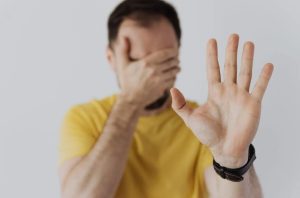 When an individual overreacts or gets aggressive because of basic questions, it’s a possible indicator that they are not telling the truth. This response is usually meant to deflect accusations or prevent telling the truth.
Rather than simply responding to a question, a liar may react negatively, deny your accusations wrongly, or excessively justify their behaviour in an overly elaborate way. This defencive response is intended to deflect attention away from their dishonesty, so it becomes harder for you to probe deeper into their words.
7. Shifting Blame to Others
Liars also will attempt to avoid bringing attention to themselves by blaming others. Every time a person always points at others or instinctively claims not to be the cause of something, then watch out.
The move keeps the liar from owning up to what he/she has said or done. By attributing the fault, they attempt to divert suspicion from themselves and sow confusion or doubt into the minds of the public.
8. Convenient Memory Lapses
Another classic sign of lying is the so-called “convenient” loss of memory. When confronted with a question that might uncover a lie, the person will suddenly claim they don’t remember certain details or incidents.
This selective memory loss would often happen when the liar knew that a specific detail would betray the truth. Instead of providing an honest answer, they act as though they have forgotten and do not provide a straight answer.
They also usually occur during the most significant moments of speech, which further suggests that the person is trying to cover their lie.
9. Changes in Breathing Patterns
Deception will most often lead to physiological tension, and this may cause a subject to impair his breathing. While being deceptive, some people have a tendency to breathe shallowly or more quickly, a reflex of increased tension.
Others may hold their breath or breathe rapidly as they attempt to control their emotions. All such changes in breathing patterns tend to be automatic and hence an unequivocal indicator of distress. Observe changes in breathing, especially if they seem to occur at moments of ambiguity or tension during the conversation.
10. Mirroring Your Reactions
The imitation of another’s body language or actions can suggest a lack of genuineness. While usually an indication of rapport establishment, when the other person mirrors your responses while being dishonest, it might feel contrived or phony.
A deceiver may be unconsciously imitating your movement or expression to simulate being in touch with you, trying to be more authentic than they are. This action is a strategy to decrease suspicion and make their lies seem more credible.
11. Delayed Responses
A liar will also pause longer before responding to questions because they require additional time to formulate a believable answer. It’s a slight hesitation, but one that can be detected.
It has nothing to do with how difficult the question is; it happens when the individual is choosing their words carefully so as not to make a mistake.
For a normal conversation, responses tend to be quick, but when an individual is fabricating an answer, the pause may mean that they are trying to conceal a lie or avoid getting caught.
Final Thoughts
In short, spotting a liar is hard to do. It is not always about reading people. Rather, you need to be careful of every small signal. Find some obvious signs, like a sudden change in how they speak or act.
Also, with other signs stated, you will have an idea when things do not seem right. Follow your instincts and notice these little clues.
