
Quick Summary:
The belief that someone’s eye movements, like looking to the left, can reveal if they’re lying is common. Investigators often try to analyse the eye movement of a person when questioning them to detect if they’re lying. Since eye movement is an involuntary body language that helps expose a liar.
But it’s not supported by scientific evidence or used in professional settings.
People move their eyes for all kinds of reasons, and those little glances aren’t reliable signs of dishonesty. That idea mostly comes from outdated theories like neuro-linguistic programming (NLP), which scientists have tested again and again with no solid proof to back it up.
So, how can you actually spot a lie? Don’t look for a single “tell.” Instead, things like frequent blinking, odd facial expressions, sweating, or rapid breathing can raise red flags. But they often just show stress or discomfort, not necessarily deceit.
For high-stakes situations, professionals often turn to polygraph tests. These tests measure involuntary physiological changes. Such as heart rate, respiration, and skin conductivity. It helps identify deception with more reliability.
Does Looking Left Mean Lying?
According to Neuro-Linguistic Programming, eye movements are connected to how we are remembering something or making it up. Looking top right refers to visual recall, and the top left means visual construct, which some interpret as lying.
But based on the 3 tests conducted by UK scientists, there is no solid scientific evidence for this, and they have dismissed the myth. This myth was believed so strongly that in the past, investigators and corporate trainers were taught these beliefs during interviews.
Psychologist Dr. Richard Wiseman has outright disapproved of the belief that eye movements can be reliable signs of lying, along with the looking-left-while-lying myth.
The Science Behind Looking Left While Lying
The belief was established through NLP, a pseudoscientific approach developed in 1975, explaining that when people look to the right, it means they’re recalling real memories. Whereas looking left means they’re constructing lies in their mind.
Although this fact was never proven, business training, law enforcement, and the media started putting this myth to work to detect lies. Another experiment by Alvert Vrij, in which they interviewed 204 passengers, found that there was no connection between the interviewees’ eye movement and deception.
Some studies claim that the movement of the pupil is caused by high cognitive load, but they do not necessarily signal deception. Moreover, scientific studies describe this claim of NLP as a hollow fact.
Other Non-verbal Cues of Someone Lying
Nonverbal cues such as body language, microexpressions, or subtle muscle movements play a major role in detecting a liar, especially when these cues appear in clusters.
Frequent Blinking
According to science, when a person feels negative emotions such as guilt, stress, and anxiety, they tend to blink frequently. Therefore, this is a sign of lying as the liar may feel unpleasant emotions.
Rapid Breathing
The stress and anxiety of lying trigger the autonomic nervous system, which can result in rapid breathing.
Mismatched Facial Expression
According to Stephen Porter and Ten Brinke, liars fail to fake their facial expressions when lying due to emotional leakage. Therefore, their speech and expression don’t match completely, and you can easily define them.
Sweating or Red Face
Sweating face flushing are both psychological stress responses. Professor Vrij states that sweating or a red face can be signs of lying in case they differ from the person’s baseline.
How to Detect Lies with Effective Methods?
If proven effective methods are followed, lies can be detected easily within a short time. Even expert liars can be detected through such methods.
Love Truth and Stay Open
As expert suggestions, you can create a friendly, nonjudgmental environment when interrogating. People tend to be dishonest when they feel tempted or think the truth can be problematic.
Focus on Words, Not Just Body Language
According to Aldert Vrij, words can expose the liar when body language seems vague. He says, although the liar may rehearse the lie beforehand, the structure of speech may expose them.
Value Honesty Upfront
Valuing honesty helps create a stress-free environment that can encourage the interviewee to avoid lying. Research says liars mostly lie to save their image, but when they know they won’t be judged, they lie less.
Challenge Details Casually
Challenging little details in the speech of the liar when the speech feels vague is a highly effective method. No matter how practiced a lie is, the liar certainly forgets the sequence or minor details under rigorous scrutiny.
Ask Open-Ended Questions
Open-ended questions force respondents to answer in detail, which can be challenging for those who are not truthful. Dr. Aldert supports this method, saying that investigators should give the suspect time to explain and then search for inconsistencies.
Verify Big Claims
It’s important to look for evidence, logic, and consistency through reliable sources when a respondent claims things that are vague and suspicious. Usually, liars get defencive or restless when investigators try to verify their claims.
Don’t Reveal You Know About the Lie
Letting the liar lie freely can be a useful approach. They often expose themselves through verbal cues or behavioural cues when they’re free to tell whatever they want to. When the subject believes that you’re not onto them, they’ll be less cautious.
Basically, playing dumb in front of the liar gives them the confidence to lie, thus making it easier to detect the lies.
Look for Patterns of Dishonesty
Repetitive dishonesty patterns, such as taking long gaps, contradicting past stories, and mismatched emotions, can be seen in a liar. As these patterns differ from a person’s usual behaviour, you can compare what’s typical of the respondent with their present state to detect lies.
Need for Professional Approaches in Lie Detection: Consider the Polygraph Test
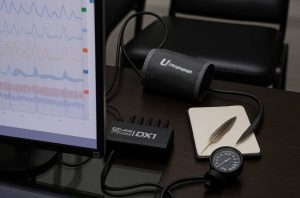
Non-verbal cues often fail to give accurate results of deception since many of these cues have other reasons. Such as cultural differences, health conditions, and individual variability. So it’s better to take a professional approach, such as a polygraph test, while doing a crucial interrogation.
The polygraph test is a highly appreciable and effective procedure. It is especially true when the truth verification is critical. Examiners apply this scientific method and find clarity through some immediate bodily responses to questions.
Such as changes in blood pressure, pulse, heart rate, respiration, and skin conductivity. The result of the polygraph test is explained based on the theory that such physiological reflexes will be different than usual when the suspect is lying.
Such physiological indicators are involuntary, which means the suspect cannot control these reflexes. As a result, the accuracy rate of the polygraph test results is higher than other interrogation procedures. So, if the truth really matters, consider using a polygraph test and uncover the actual fact more reliably.
